The Early Fellowship: A Batch of Chemists and Engineers
What do you call a group of chemists? The Morristown Unitarian Fellowship.
OK so that is an exaggeration but there is some truth to the statement. The 52 founders of the Fellowship included many chemists, and also engineers and others with scientific or technical jobs.
It was represented an interesting fulfilment of letter to the editor published on Oct. 12, 1955, the day after Munroe Husbands spoke to those interested in hearing about Unitarianism. The well-[timed letter was from Winfield Greenleaf, who would chair the steering committee that guided the Fellowship’s formation.
Greenleaf noted he had read about the planned event and reported that Unitarianism had a special appeal to engineers, scientists “and other professional men”.. And in this era, the technical community was almost entirely men--married women, including Fellowship founders, did not work outside the home.
Among the first 29 male members, there were 19 with scientific or technical occupations: seven chemists, two chemistry teachers; three mechanical engineers; one electrical engineer; a rocket scientist, one rocket engineer; one electronics technician and one radio technician; one laboratory worker and one physicist.
This reflected the changing Morris County economy, which had been largely agricultural. The of chemists arrived with Warner-Chilcott, later Warner-Lambert. —Marshall Deutsch who initiated the movement towards forming the congregation, John Doczi and Arthur Babson, the third president.
The early elements of Bell Labs talent included Stuart Lloyd, a physicist; and Edward Zajacs, a mechanical engineer, who also had a biology degree, and became an economics professor, two of whom contributed revolutionary ideas in their field
This group provided much of the early leadership. Of the first three Fellowship presidents, the first and third, Marsh Steiding and Babson, were chemists, and the second, Larry Churchill, was a mechanical engineer. Four of the first seven trustees elected in January 1956, including Steiding and Churchill, had scientific careers.
One of the first trustees, Robertson Youngquist, was a rocket scientist who worked for Reaction Motors, a Morris County company considered the nation’s first rocket company which once launched rockets from Franklin Lakes and Wanaque. He would move to the Washington D.C. area and become well known within the space community. Another founding member, Alfred Mathisen, who also worked for Reaction Motors later designed the thrusters for the Lunar Landing Module for Project Apollo.
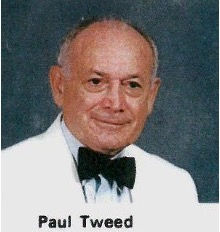
Marsh Steiding, one of the chemists, worked for some time at the Hercules Power Corp. where he was an explosives chemist, while Paul Tweed, who worked at Picatinny Arsenal, who also an explosives chemist and, was prominent in the military research field.


Comments